Cabo Verde Cape Verde
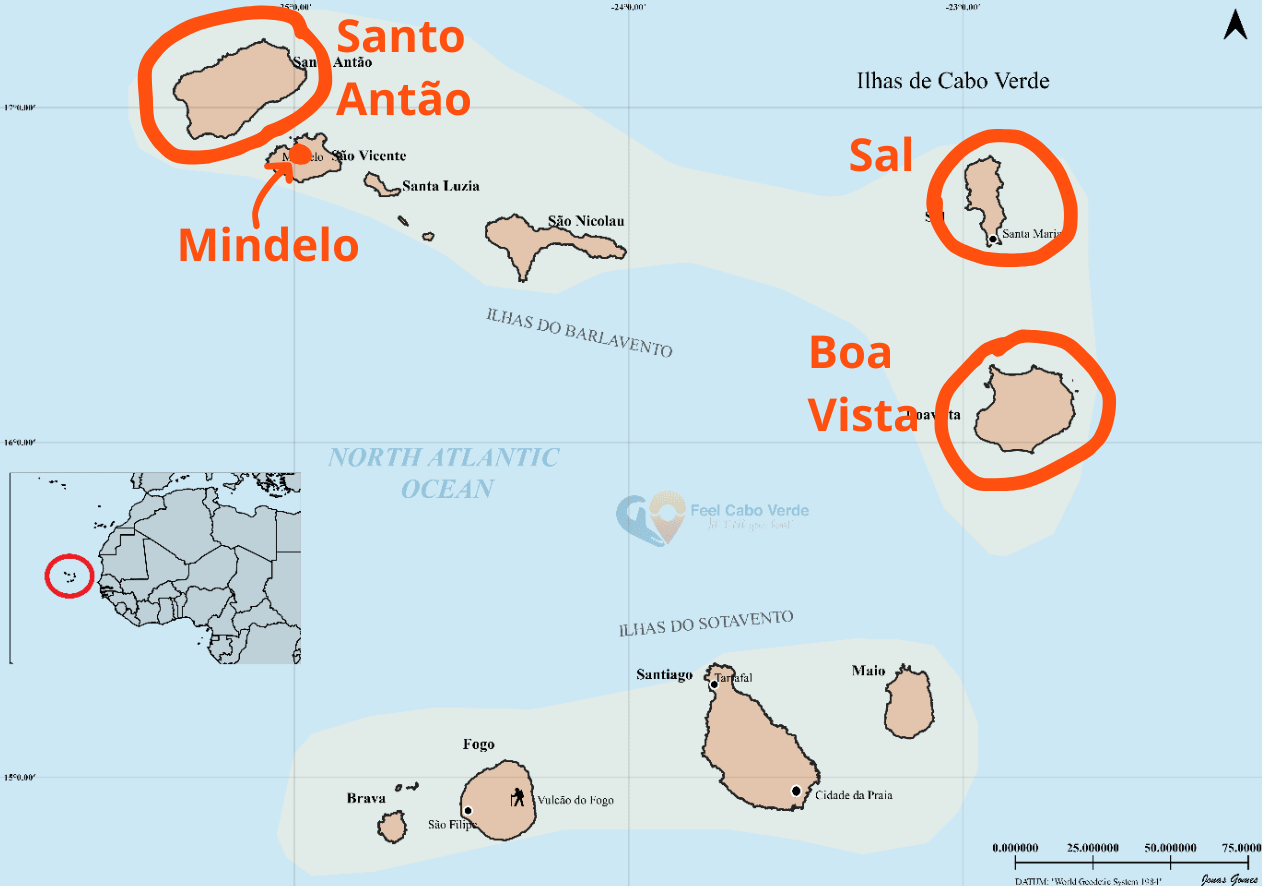
È difficile trovare le parole. Cabo Verde mi sta stupendo in una maniera che non pensavo possibile. Mi sento costantemente elettrizzato, così tanto che mentre dormo non riesco bene ad entrare nella fase REM e mi sveglio spesso. Eppure in questo momento mi è crollato il mondo addosso. Ce l’avevo quasi fatta, avevo trovato un passaggio per attraversare l’Atlantico. Avrei solo dovuto raggiungere la nuova barca, un catamarano, sull’isola di Boa Vista, a 200 km da qua. I trasporti tra le isole caboverdiane sono pessimi. I voli vengono spesso cancellati. Avevo deciso di affidarmi allora all’unico traghetto che una volta a settimana va fino a Boa Vista. Ma anche la compagnia di traghetti ha una pessima fama: corruzione, inefficienza, ritardi. E stasera ne arriva la conferma: il traghetto è danneggiato, il viaggio di domani cancellato. E io non posso raggiungere il catamarano. I voli sono ormai tutti pieni. Mando un messaggio al capitano, non riuscirò a raggiungerli. Dovrò ricominciare la ricerca. È tardi, vado a dormire, e per tirarmi su il morale penso agli ultimi giorni incredibili passati esplorando Cabo Verde.
—
Circa una settimana fa lascio l’equipaggio del Bikini e atterro nel minuscolo aeroporto di Mindelo. Mi impressiona subito il paesaggio, montagne verdi e marroni, scavate, appuntite, sembrano uscite dalla galleria del vento. Fa caldo. L’aeroporto è lontano dalla città e il mio ostello mi manda un messaggio: se voglio spostarmi come i locali e spendere un decimo del prezzo per il viaggio (ovvio) posso aspettare un aluguer - minibus collettivo - che passa ogni tanto sullo stradone lì davanti. Non hanno orari, ovviamente. Chiedo informazioni ma trovo solo taxisti e addetti dell’aeroporto che fanno finta di non capire o mi dicono che l’aluguer non esiste. Presto tutti i turisti salgono sui costosi taxi e io rimango l’unico gringo scemo con il mega zaino sotto il sole. Ostinato, cammino per dieci minuti sullo stradone finché arrivo a una caserma militare e parlando mezzo in spagnolo (la lingua più vicina al portoghese che conosco) mezzo con i gesti mi dicono che sì, sto cazzo di aluguer esiste e posso aspettarlo lì.
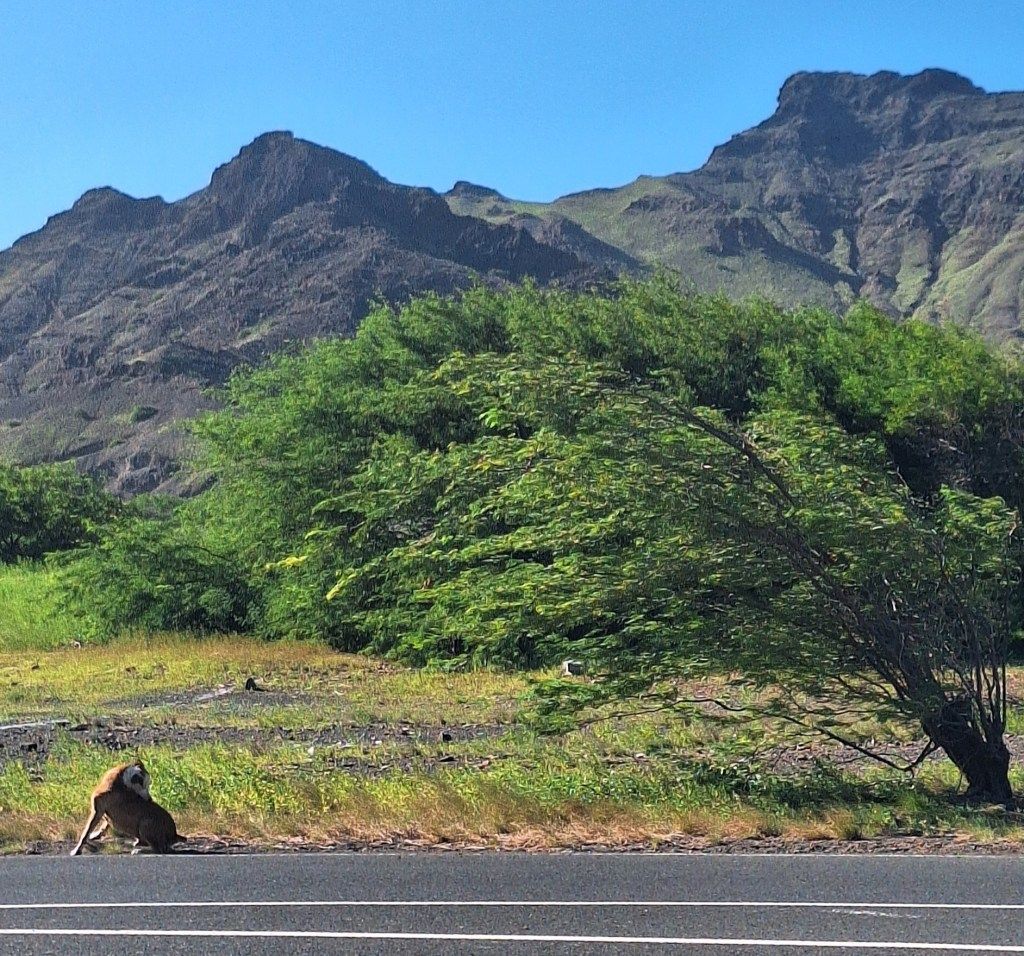
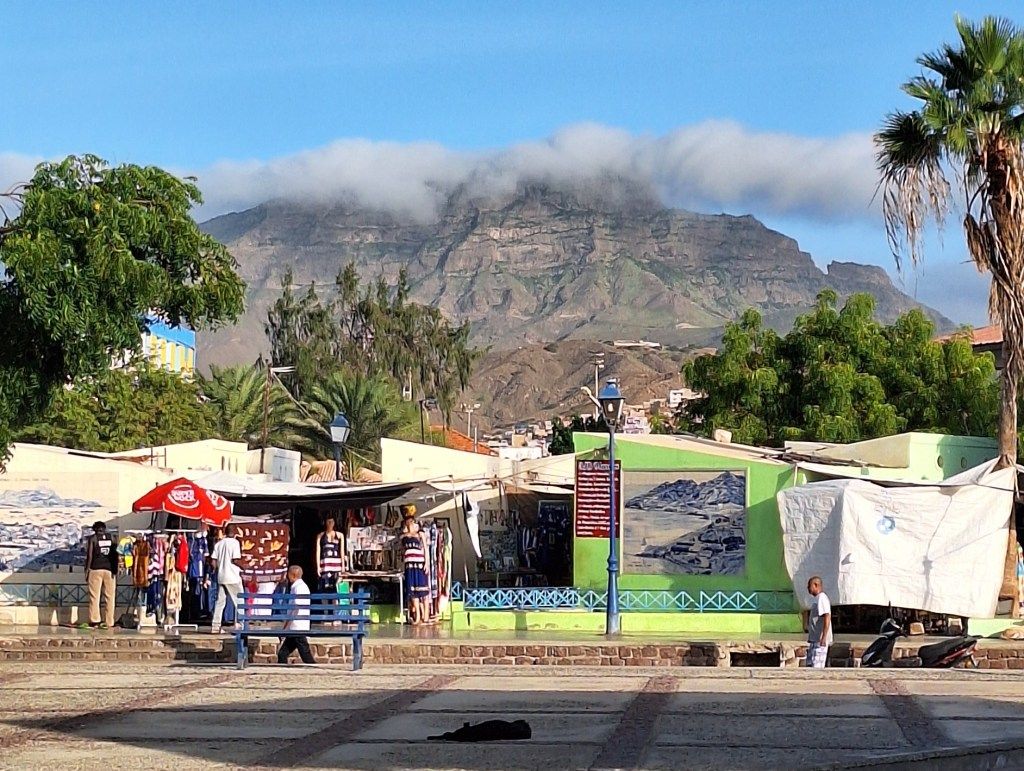
Aspetto sotto il sole. Solo io, un militare e un cane. Dopo una mezz’oretta passa un minivan, lo chiamo, si ferma. Eccolo qua l’aluguer. Salgo a bordo, è pieno ma non ci sono turisti. Un signore gentile con tre denti mi aiuta a fare spazio per il mio zaino, tra caschi di banane, polli vivi, scatole varie. L’autista fa un bel detour della periferia di Mindelo prima di arrivare in città, per scaricare pacchi e alcune bombole di aria compressa. Io mi godo il tour gratuito dei sobborghi di Mindelo, in cui mai entrerei da solo. L’aluguer finisce la sua corsa nella piazza principale. Passo tra venditrici di frutta mai vista, polveri magiche, sacchetti non identificabili. C’è anche una scimmia legata a un palo (!!). Mi incammino verso l’ostello e penso che non ci sarebbe stato miglior modo di iniziare il mio viaggio a Cabo Verde.
Nei due giorni seguenti esploro la città. Inizio con il cibo, voglio provare la cachupa, piatto nazionale. In ostello mi consigliano un posto in cui non vanno i turisti, costa una miseria, c’è un solo piatto del giorno, e a volte è la cachupa. Si chiama container, ed è letteralmente un grosso container ‘convertito’ in ristorante, davanti al porto. Arrivo all’ora di pranzo, è pieno di lavoratori in pausa, mi fanno spazio tra di loro per sedermi. Un tipo svitato ma simpatico mi spiega come funziona: scrivi il tuo nome su un libro e aspetti. Non c’è la cachupa ma mi arriva pesce con riso e verdura. Perfetto.
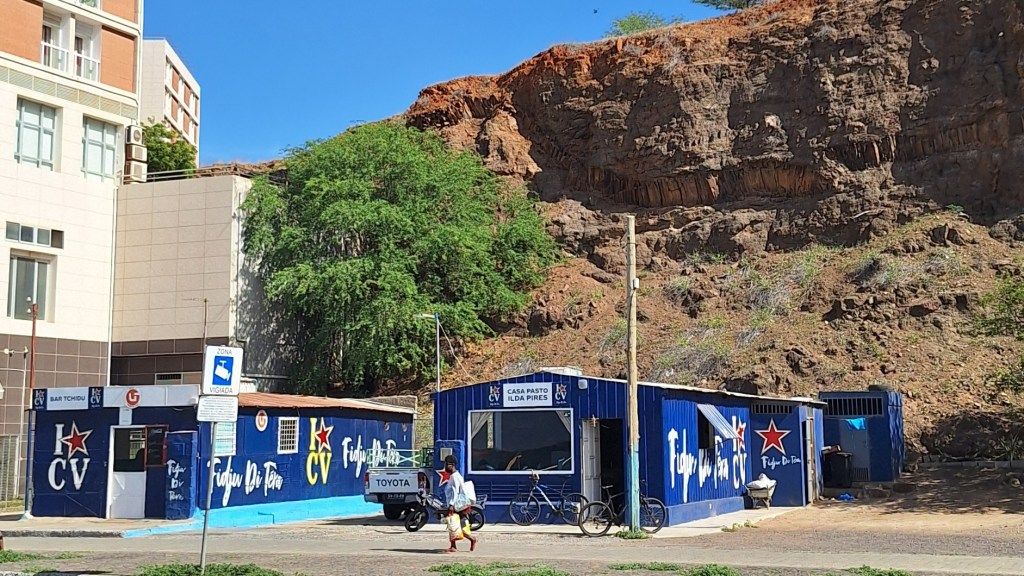
Inizio ad esplorare la città. In qualche ora Mindelo mi manda fuori di testa. Torno in piazza, curioso tra le bancarelle cercando di capire che cosa vendano. Calabaceira, tamarindo, guayaba. Tutte cose nuove per me. Vado al mercato del pesce, faccio zigzag tra i gatti e le mosche. Mangio alle bancarelle dei mercati, le persone sono spesso gentili con me e un po’ incuriosite che io mangi lì con loro.
Le isole di Cabo Verde sono rimaste disabitate fino al XV secolo. Poi i portoghesi iniziarono ad insediarvisi, perché erano una stop ideale tra Africa occidentale e Americhe. E in quel periodo era in voga un business molto lucroso: la tratta degli schiavi. Così oggi nelle isole caboverdiane vivono i discendenti degli schiavi africani, mescolati con portoghesi e chissà quale altro pirata. Come risultato i caboverdiani hanno generalmente la pelle nera, ma sono un mix incredibile di tratti e lineamenti molto diversi. La lingua non fa eccezione: il kriol è un cocktail di portoghese e diverse lingue dell’Africa occidentale, principalmente di diverse comunità del Gambia. Nacque dall’esigenza urgente di capirsi tra i coloni portoghesi e gli schiavi. Ma, in perfetto stile post coloniale, la lingua ufficiale rimane ancora oggi il portoghese.
Ovviamente l’espressione culturale ha risentito di tutte queste influenze ed è ricchissima. E Mindelo è considerata la capitale culturale di Cabo Verde. Quindi cerco e visito diversi luoghi di aggregazione culturale, tra cui biblioteche, librerie indipendenti, un ‘utero creativo’ e un laboratorio di ‘ricerca teatrale’. Nel centro culturale di Mindelo scopro che è appena finito un festival di teatro e mi segno almeno una quindicina di band e artisti da ascoltare. La sera è facile trovare locali con buona musica live. La città è tappezzata di murales di Cesária Évora, la regina della morna - la musica nazionale. Le sonorità della musica caboverdiana sono speciali, allegre e malinconiche.
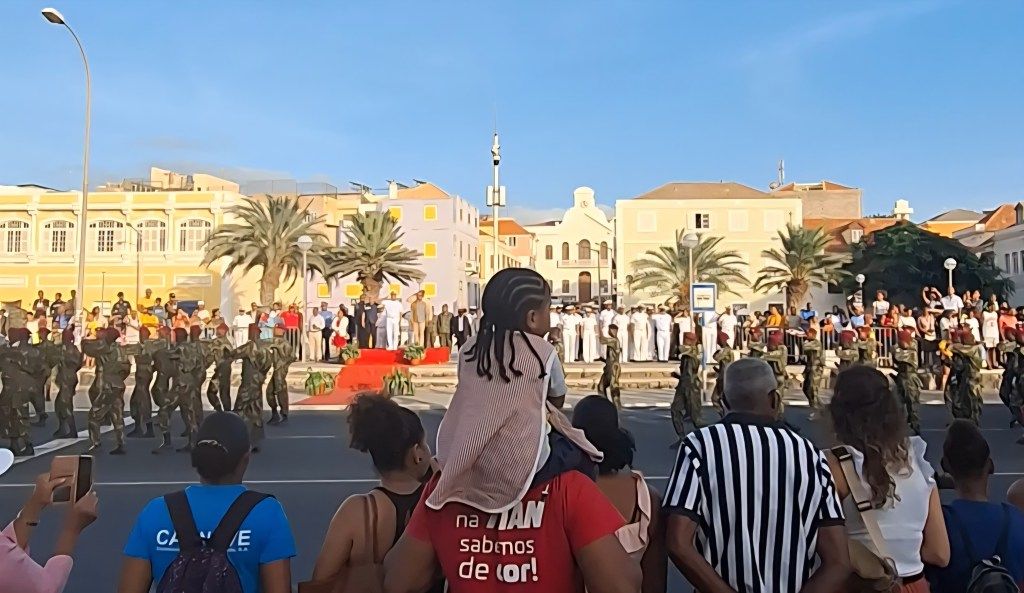
Ma la ricchezza culturale stride con la difficoltà economica. Spesso fuori dai negozi qualcuno, spesso un bambino, ti chiede di comprare un cartone di latte o qualcosa da mangiare - no, non bisogna dargli corda, probabilmente lo rivenderanno per comprarsi colla da sniffare. Allontanandomi troppo dal centro vengo troppo spesso squadrato e catcallato da personaggi ambigui, che la sera aumentano.
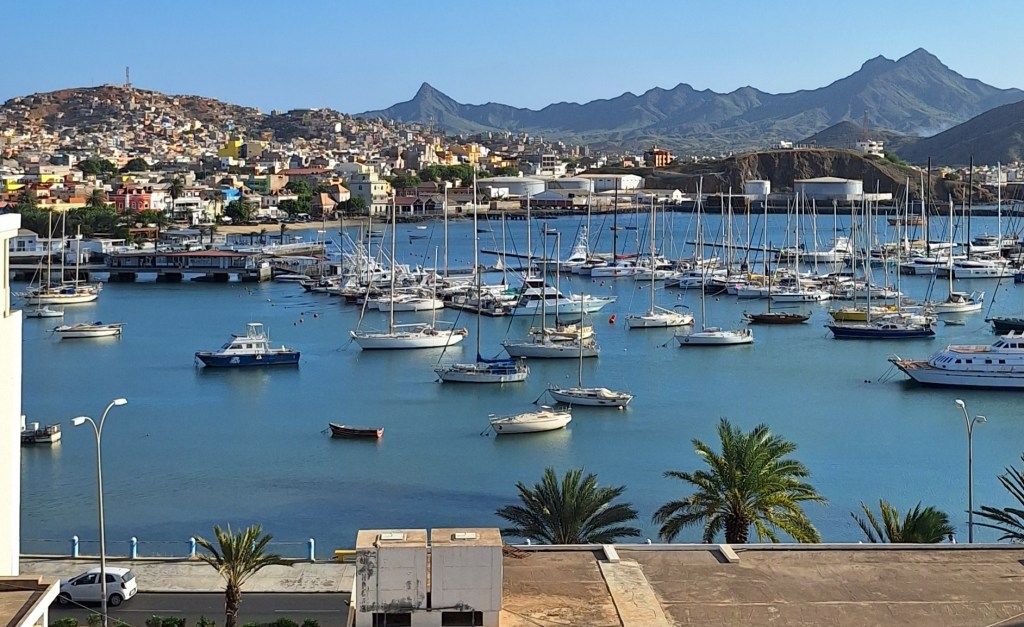
In tutto questo non dimentico la ragione principale per cui sono qua: la marina di Mindelo. Da qua partono tutte le barche che da Cabo Verde attraversano l’Atlantico. Io da più di una settimana ho aggiornato il mio profilo sui siti specializzati e spammato ovunque su gruppi Facebook, senza ricevere proposte concrete. Non mi rimane che andare di persona in marina e chiedere in giro. Ho già preparato un volantino con i miei contatti e la mia esperienza, da stampare e appendere in bacheca. Sono al parco, tra bambini che giocano sul dondolo e signore che fanno pilates, cercando una copisteria. E improvvisamente ricevo un messaggio lapidario, che mi manda in fibrillazione. È Noël, il capitano di un catamarano. Sta cercando una persona per la traversata.
La sera mi chiama per una prima annusata reciproca e per spiegarmi i termini. L’unico altro membro dell’equipaggio è Tessa, una ragazza olandese più giovane di me. Il piano prevede qualche giorno di navigazione tra le isole di Cabo Verde, per vedere se funzioniamo insieme. Poi partire per la traversata, il prima possibile. La barca si chiama Laia, ed è un ex catamarano da corsa, ora ristrutturato per essere vivibile ed energicamente indipendente. La mia limitata esperienza non è un problema, se sono disposto ad imparare. Noël sembra preciso, paziente, competente. Anche Tessa mi chiama, per checkeare la vibe. Io le chiedo com’è la vita in barca su Laia e finiamo a parlare di Cowboy Bebop (mio stato di whatsapp). Mi dicono che mi faranno sapere domani. Mi sono piaciuti, e il piano sarebbe perfetto per me. Vorrei partire il prima possibile per raggiungere il centroamérica prima di Natale, ma molti partono più tardi. E mi gasa poter stare su una barca in cui c’è tanto da fare e tanto da imparare.
Il giorno dopo ho in programma di andare su Santo Antão, l’isola di fronte a Mindelo. Viene chiamata il paradiso degli escursionisti. Ci vado senza aver programmato nulla e senza sapere che cosa aspettarmi. Mentre aspetto il traghetto, arriva un messaggio: Noël e Tessa hanno scelto me!! Esplodo dalla felicità. Vogliono che li raggiunga a Boa Vista, un’isola lontana, per navigare insieme di nuovo fino a Mindelo. In 10 minuti ho già prenotato il lungo traghetto che mi porterà a Boa Vista. Ho tre giorni prima di raggiungerli: abbastanza tempo per una rapida esplorazione di Santo Antão.
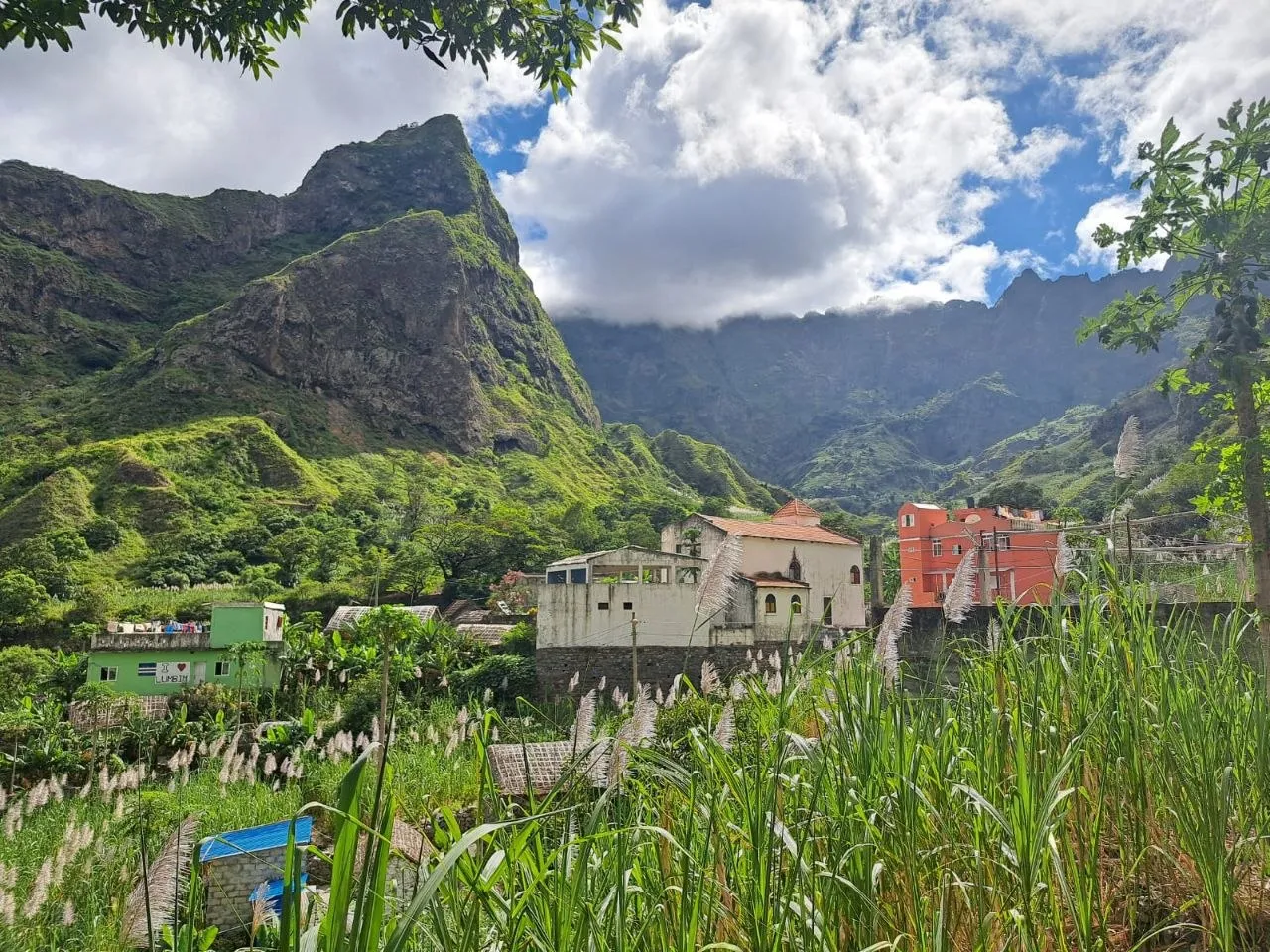
E anche questa volta rimango a bocca aperta. Santo Antão mi sbalordisce in un modo che non credevo possibile. Sembro sempre esagerato quando racconto di Cabo Verde ma giuro che è vero. Gli alisei, venti caldi che vengono dal Sahara (gli stessi che spingono le barche per attraversare l’Atlantico), scaricano pioggia quando arrivano sulle pendici delle montagne di Santo Antão. Cosí quando ridiscendono dall’altro versante rimangono secchi. E come risultato l’isola è per metà desertica, per metà verde e rigogliosa. È anche l’ultima isola a Ovest di Cabo Verde, al largo dell’Africa Occidentale. Oltre, 3000km di oceano aperto, fino alle Americhe. Sembra di essere alla fine del mondo. Eppure anche qua esistono dei paesi abitati. Alcuni sulla costa, altri sperduti sulle montagne. A volte collegati da strade, altre volte solo da sentieri. È proprio su questi sentieri i pochi turisti sull’isola si avventurano tra un paese e l’altro. I panorami sono pazzeschi. Sembra il pianeta di Avatar.
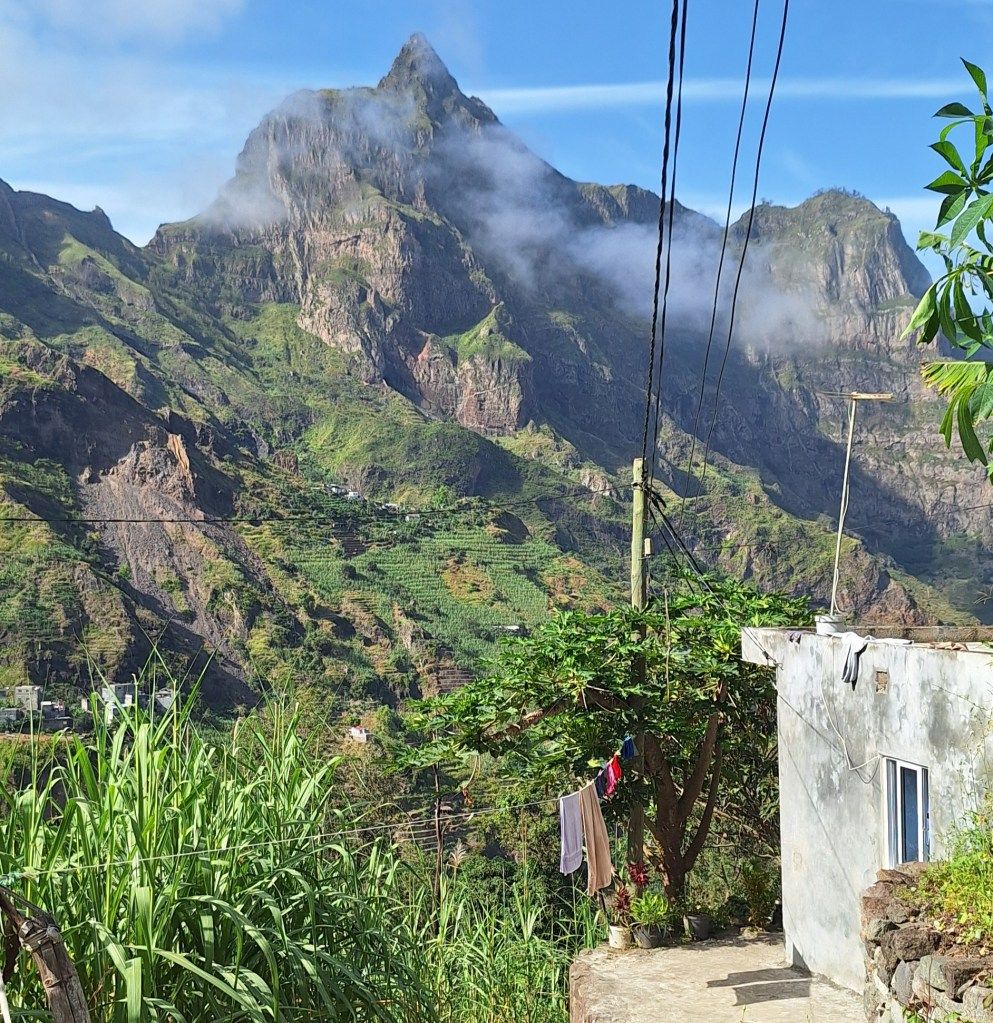
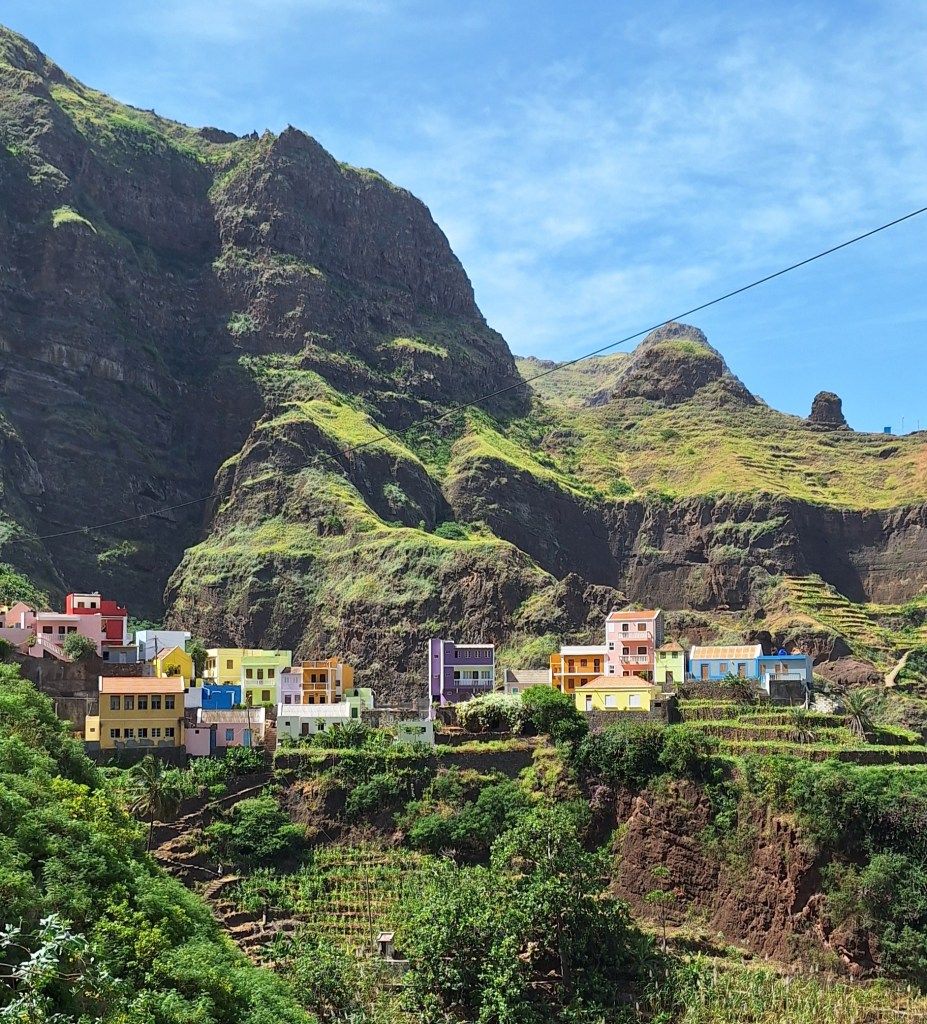
Mi sembra incredibile che qualcuno possa vivere qui. Il primo giorno parto da una grande caldera vulcanica spenta, ora una distesa di campi coltivati e bestiame, e scendo attraversando la valle di Paul. Attraverso paesini minuscoli e terrazzamenti. Banane, caffè, canna da zucchero, frutta del pane, papaya, lychee. Un bambino, quando scopre da dove vengo, inizia ad elencarmi tutte le squadre di calcio della serie A. Le conosce meglio di me.
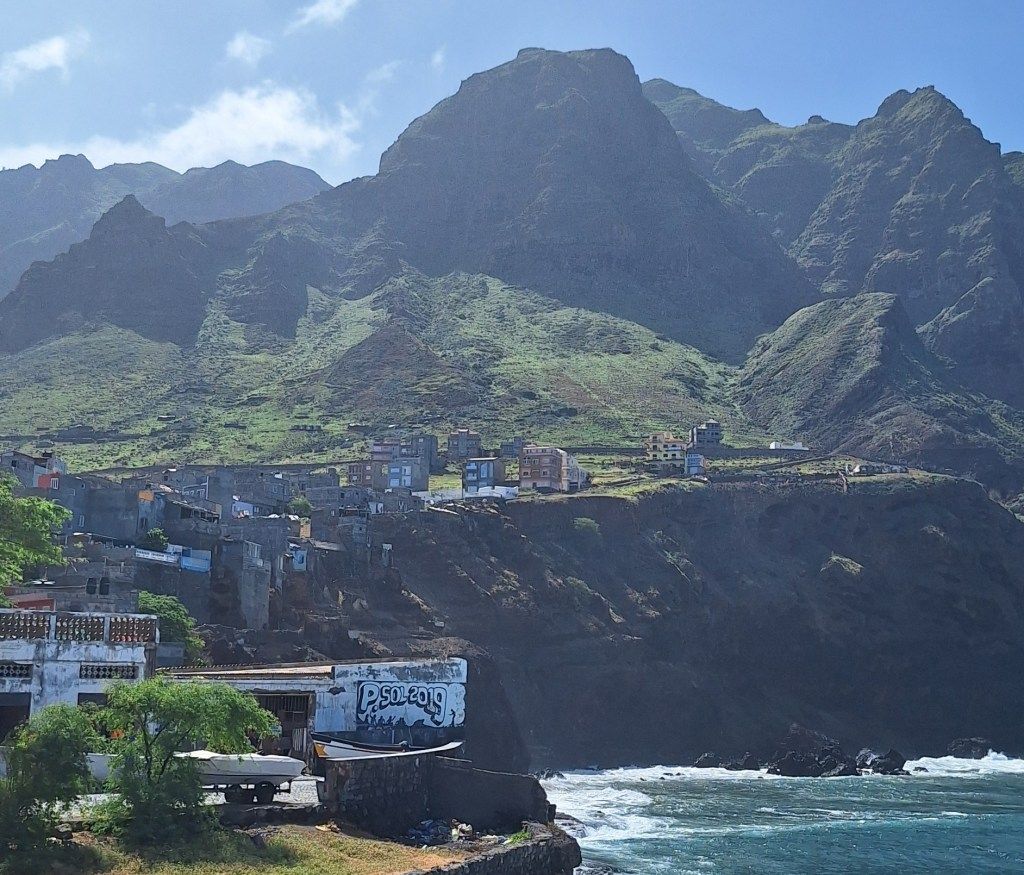
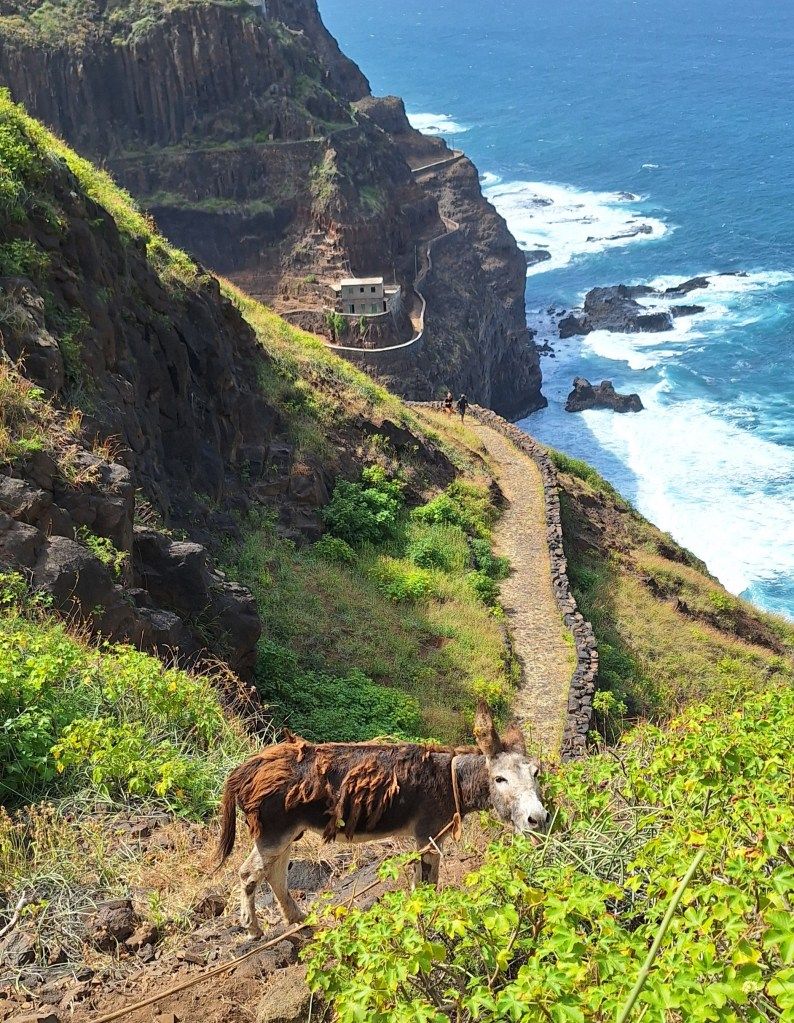
Il secondo giorno seguo un sentiero lungo la costa. Anche qua paesini arroccati sul mare, terrazzamenti, asini, capre. Fa caldo, mi stanco molto. La sera, dopo cena, ho ancora fame e finisco dal paninaro nel paese di Ribeira Grande. Mentre aspetto vengo avvicinato da diversi personaggi, alcuni con notevole tasso alcolico. Parlando in portoghese, inglese, italiano, spagnolo, gesti, mi insegnano alcune parole in kriol. Scopro che il kriol è una lingua senza standard. Piú simile al portoghese sulle isole di Barlavento (a nord dell’arcipelago, dove sono ora), più simile ad alcune lingue del Gambia in quelle di Sotavento (a sud). Anche tra un’isola e l’altra c’è molta differenza e a volte non si capiscono tra loro.
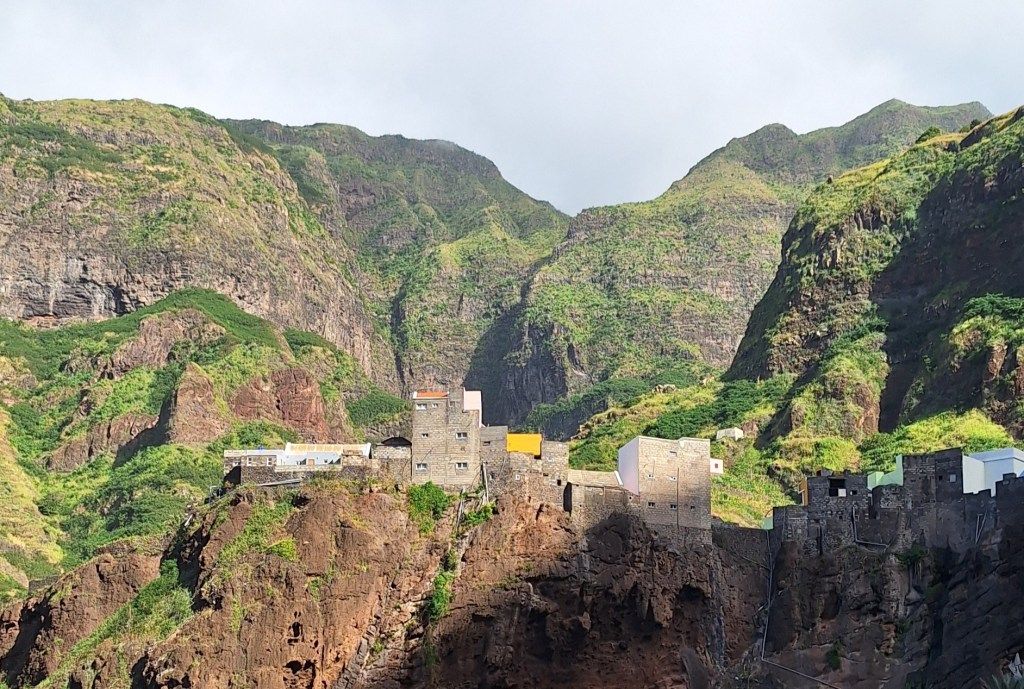
E così la mia breve permanenza a Santo Antão finisce. Mi ha rapito il cuore ed entra subito nel mio olimpo personale. Un assaggio troppo breve di questa isola mi lascia tanta voglia di tornare. Sul traghetto, mentre torno a Mindelo, piango, come quando ho lasciato lo Yosemite. Ma so che lasciarla ne vale la pena: il giorno dopo mi aspetta il traghetto per Boa Vista, per raggiungere Noël e Tessa. Ma la sera arriva la più terribile delle notizie: il traghetto per Boa Vista è cancellato per guasto tecnico. Il prossimo, se esisterà, sarà tra una settimana. Ed eccoci all’inizio di questa pagina di diario.
—
La mattina dopo Noël mi chiama, so giá che non possono aspettarmi una settimana e sceglieranno qualcun altro. E invece mi dice che accelereranno la loro partenza da Boa Vista e mi verranno a prendere a Mindelo tra due giorni. Faremo vela insieme, andremo a Santa Luzia, isola disabitata e 100% riserva naturale. E poi a Santo Antão, per esplorarla insieme, prima di prepararci per attraversare l’Atlantico. Di nuovo le montagne russe emotive mi portano su. Passeggio tra le strade di Mindelo con un sorriso da ebete. Isola disabitata, di nuovo a Santo Antão, imparare la vela, prepararsi per la traversata oceanica. Non avrei potuto chiedere di meglio.
It is hard to find the words. Cape Verde is astonishing me in a way I never thought possible. I feel constantly electrified, so much so that while I sleep I can’t really enter the REM phase and I often wake up. And yet right now my world has collapsed. I had almost made it, I had found a ride to cross the Atlantic. I only had to reach the new boat, a catamaran, on the island of Boa Vista, 200 km from here. Transport between the Cape Verde islands is terrible. Flights are often canceled. I had decided then to rely on the only ferry that once a week goes to Boa Vista. But even the ferry company has a terrible reputation: corruption, inefficiency, delays. And tonight the confirmation arrives: the ferry is damaged, tomorrow’s trip canceled. And I can’t reach the catamaran. Flights are now all full. I send a message to the captain, I won’t be able to meet them. I will have to start the search again. It is late, I am going to sleep, and to lift my spirits I think of the incredible days just spent exploring Cape Verde.
—
About a week ago I left the crew of the Bikini and landed at the tiny airport of Mindelo. The landscape immediately struck me: green and brown mountains, carved, pointed, they look like they came out of a wind tunnel. It’s hot. The airport is far from the city and my hostel sends me a message: if I want to move like the locals and spend a tenth of the price for the trip (obviously) I can wait for an aluguer – a collective minibus – that sometimes passes on the big road in front. They have no schedules, of course. I ask for information but find only taxi drivers and airport staff who pretend not to understand or tell me that the aluguer doesn’t exist. Soon all the tourists get into the expensive taxis and I remain the only dumb gringo with the huge backpack under the sun. Stubborn, I walk ten minutes along the big road until I arrive at a military barracks and speaking half in Spanish (the closest language to Portuguese I know), half with gestures, they tell me that yes, this damn aluguer exists and I can wait for it there.
I wait under the sun. Just me, a soldier, and a dog. After about half an hour a minivan passes, I call it, it stops. Here it is, the aluguer. I get on board, it’s full but there are no tourists. A kind man with three teeth helps me make space for my backpack, among bunches of bananas, live chickens, and various boxes. The driver makes a nice detour through the outskirts of Mindelo before reaching the city, to unload packages and a few compressed air cylinders. I enjoy the free tour of Mindelo’s suburbs, where I would never enter on my own. The aluguer ends its run in the main square. I pass through fruit sellers with fruits I’ve never seen, magic powders, unidentifiable bags. There’s even a monkey tied to a pole (!!). I walk toward the hostel and think that there could have been no better way to start my trip in Cape Verde.
In the following two days I explore the city. I start with the food, I want to try cachupa, the national dish. At the hostel they recommend me a place where tourists don’t go, it costs next to nothing, there’s only one dish of the day, and sometimes it’s cachupa. It’s called container, and it is literally a big container “converted” into a restaurant, in front of the port. I arrive at lunchtime, it’s full of workers on their break, they make space for me among them to sit down. A crazy but friendly guy explains how it works: you write your name in a book and wait. There’s no cachupa but I get fish with rice and vegetables. Perfect.
I start exploring the city. In just a few hours Mindelo blows my mind. I return to the square, wandering among the stalls trying to understand what they are selling. Calabaceira, tamarind, guava. All new things for me. I go to the fish market, zigzagging between cats and flies. I eat at the market stalls, people are often kind to me and a bit curious that I eat there with them.
The islands of Cape Verde remained uninhabited until the 15th century. Then the Portuguese began to settle there, because they were an ideal stop between West Africa and the Americas. And at that time a very lucrative business was in fashion: the slave trade. So today on the Cape Verde islands live the descendants of African slaves, mixed with Portuguese and who knows what other pirates. As a result, Cape Verdeans generally have black skin, but they are an incredible mix of very different features and traits. The language is no exception: Kriol is a cocktail of Portuguese and several West African languages, mainly from different communities of Gambia. It was born from the urgent need to understand one another between the Portuguese colonists and the slaves. But, in perfect post-colonial style, the official language still remains Portuguese.
Obviously cultural expression has absorbed all these influences and is incredibly rich. And Mindelo is considered the cultural capital of Cape Verde. So I look for and visit different places of cultural gathering, including libraries, independent bookstores, a “creative womb,” and a “theatrical research” workshop. At the cultural center of Mindelo I discover that a theater festival has just ended and I note down at least fifteen bands and artists to listen to. In the evening it’s easy to find venues with good live music. The city is covered with murals of Cesária Évora, the queen of morna – the national music. The sounds of Cape Verdean music are special, joyful and melancholic.
But the cultural richness clashes with the economic hardship. Often outside the shops someone, often a child, asks you to buy a carton of milk or something to eat – no, you shouldn’t give in, they will probably resell it to buy glue to sniff. When I go too far from the center I am too often stared at and catcalled by shady characters, who become more numerous in the evening.
In all this I don’t forget the main reason why I am here: the marina of Mindelo. From here depart all the boats that cross the Atlantic from Cape Verde. For more than a week I have updated my profile on specialized websites and spammed everywhere on Facebook groups, without receiving any concrete proposals. The only thing left is to go in person to the marina and ask around. I have already prepared a flyer with my contacts and my experience, ready to print and put up on the notice board. I am at the park, among children playing on the swings and ladies doing pilates, looking for a copy shop. And suddenly I receive a brief message that sends me into a frenzy. It’s Noël, the captain of a catamaran. He is looking for someone for the crossing.
That evening he calls me for a first mutual sniff and to explain the terms. The only other crew member is Tessa, a Dutch girl younger than me. The plan includes a few days of sailing around the Cape Verde islands, to see if we work well together. Then leave for the crossing, as soon as possible. The boat is called Laia, and it is a former racing catamaran, now refurbished to be livable and energy-independent. My limited experience is not a problem, as long as I am willing to learn. Noël seems precise, patient, competent. Tessa also calls me, to check the vibe. I ask her what life on board Laia is like and we end up talking about Cowboy Bebop (my WhatsApp status). They tell me they will let me know tomorrow. I liked them, and the plan would be perfect for me. I want to leave as soon as possible to reach Central America before Christmas, but many leave later. And I’m excited at the thought of being on a boat where there’s so much to do and so much to learn.
The next day I plan to go to Santo Antão, the island across from Mindelo. It is called the hiker’s paradise. I go there without planning anything and without knowing what to expect. While I am waiting for the ferry, a message arrives: Noël and Tessa have chosen me!! I explode with joy. They want me to join them in Boa Vista, a distant island, to sail together back to Mindelo. Within 10 minutes I’ve already booked the long ferry that will take me to Boa Vista. I have three days before joining them: enough time for a quick exploration of Santo Antão.
And once again I am left speechless. Santo Antão amazes me in a way I didn’t think possible. I always seem exaggerated when I talk about Cape Verde, but I swear it’s true. The trade winds, hot winds that come from the Sahara (the same ones that push the boats to cross the Atlantic), release rain when they hit the slopes of Santo Antão’s mountains. Then, when they descend the other side, they are dry. And as a result the island is half desert, half green and lush. It is also the westernmost island of Cape Verde, off the coast of West Africa. Beyond it, more than 3000 km of open ocean, all the way to the Americas. It feels like being at the end of the world. And yet even here there are inhabited villages. Some on the coast, others scattered in the mountains. Sometimes connected by roads, other times only by trails. It is precisely along these trails that the few tourists on the island venture from one village to another. The views are mind-blowing. It looks like the planet from Avatar.
It seems incredible to me that someone can live here. On the first day I start from a large extinct volcanic caldera, now a stretch of cultivated fields and livestock, and descend through the Paul Valley. I pass through tiny villages and terraced fields. Bananas, coffee, sugar cane, breadfruit, papaya, lychee. A child, when he finds out where I am from, begins listing all the Serie A soccer teams. He knows them better than I do.
On the second day I follow a trail along the coast. Here too there are villages perched over the sea, terraces, donkeys, goats. It’s hot, I get very tired. In the evening, after dinner, I’m still hungry and I end up at a sandwich stand in the town of Ribeira Grande. While I wait I am approached by several characters, some with a considerable alcohol level. Speaking in Portuguese, English, Italian, Spanish, and gestures, they teach me some words in Kriol. I discover that Kriol is a language without a standard. More similar to Portuguese on the Barlavento islands (in the north of the archipelago, where I am now), more similar to some Gambian languages on the Sotavento islands (in the south). Even from one island to another there is a lot of difference and sometimes they don’t understand each other.
And so my short stay in Santo Antão comes to an end. It stole my heart and immediately enters my personal Olympus. Such a brief taste of this island leaves me with a strong desire to return. On the ferry, as I head back to Mindelo, I cry, like when I left Yosemite. But I know leaving it is worth it: the next day I am supposed to take the ferry to Boa Vista, to meet Noël and Tessa. But in the evening the worst news arrives: the ferry to Boa Vista is canceled due to a technical fault. The next one, if it even exists, will be in a week. And here we are at the beginning of this diary entry.
—
The next morning Noël calls me, I already know they can’t wait a week for me and will choose someone else. Instead, he tells me they will accelerate their departure from Boa Vista and come to pick me up in Mindelo in two days. We will sail together, go to Santa Luzia, an uninhabited island and 100% nature reserve. And then to Santo Antão, to explore it together, before preparing for the Atlantic crossing. Once again the emotional roller coaster takes me up. I walk through the streets of Mindelo with a goofy smile. Uninhabited island, back to Santo Antão, learning to sail, getting ready for the ocean crossing. I couldn’t have asked for anything better.
Resta aggiornato Stay updated
Ricevi una mail a ogni nuovo racconto Get an email with every new entry
Niente spam, solo i nuovi capitoli del viaggio - promesso :) No spam, just the new chapters of the journey - I promise :)
Iscrizione completata! Riceverai una mail a ogni nuovo racconto. You're subscribed! You'll get an email with every new entry.
Qualcosa è andato storto. Riprova. Something went wrong. Please try again.